Caregiver Benefits 2026: New Policies & Family Support Impact
Anúncios
Upcoming policy changes to 2026 caregiver benefits mark a major shift in U.S. family support. This update highlights key legislative changes, how they directly affect family caregivers, and critical developments to monitor next.
Anticipating Major Shifts in Caregiver Support
As 2026 approaches, significant policy shifts are on the horizon, poised to redefine how family caregivers receive support.
These changes reflect a growing recognition of the vital role caregivers play in the nation’s healthcare system and economy.
Officials have indicated that legislative efforts are underway to address long-standing gaps in current benefit structures.
This proactive approach aims to provide more comprehensive and equitable assistance to those dedicating their lives to caring for others.
Anúncios
The discussions involve various stakeholders, including government agencies, advocacy groups, and caregiving organizations, all contributing to a framework that seeks to strengthen the support infrastructure for Caregiver Benefits 2026.
Understanding the Driving Forces Behind Policy Changes
Several factors are propelling the push for new policies concerning Caregiver Benefits 2026, primarily driven by demographic shifts and economic realities.
The aging U.S. population and the increasing prevalence of chronic conditions necessitate robust caregiving support.
Economic analyses consistently highlight the immense value of unpaid caregiving, often preventing higher healthcare costs and institutionalization.
Policymakers are now actively seeking ways to formally acknowledge and financially support this critical workforce.
Furthermore, advocacy from caregiver organizations has significantly influenced the legislative agenda, bringing personal stories and data to the forefront.
Their efforts underscore the urgent need for systemic changes in how caregiving is valued and supported.
Anúncios
Demographic Imperatives and Economic Realities
The United States faces an unprecedented demographic shift, with a rapidly aging population requiring more long-term care than ever before.
This demographic reality places immense pressure on family caregivers, who often juggle care responsibilities with their own careers and family needs.
Economically, the cost of formal long-term care can be prohibitive for many families, making informal caregiving an indispensable, yet often uncompensated, alternative.
Recognizing this, new policies for Caregiver Benefits 2026 aim to alleviate some of the financial burdens associated with providing essential care.
Aging population statistics underscore the increasing demand for care.
The economic value of unpaid caregiving is now being formally recognized.
Healthcare system strain necessitates stronger home and community-based support.
Key Legislative Proposals on the Table for 2026
Multiple legislative proposals are currently under consideration, each addressing different facets of Caregiver Benefits 2026.
These proposals range from direct financial assistance to expanded access to respite care and training programs.
One prominent area of focus is the potential for tax credits or direct payments to family caregivers, aiming to offset out-of-pocket expenses.
Another significant discussion revolves around strengthening existing programs like Medicaid’s Home and Community-Based Services (HCBS).
Lawmakers are also exploring ways to improve job protections and flexibility for employed caregivers, recognizing the need for a balance between work and care responsibilities.
The goal is a multi-pronged approach to comprehensive support.
Direct Financial Assistance and Tax Incentives
Proposals for direct financial assistance, such as monthly stipends or grants, are gaining traction, intending to provide tangible relief to caregivers.
These measures acknowledge that caregiving often comes with significant financial strain, impacting personal savings and retirement plans.
Additionally, discussions include expanding existing tax credits or introducing new ones specifically for caregiving expenses.
These incentives could help families manage costs related to medical supplies, home modifications, and specialized care services, making care more sustainable.
Proposed tax credits could significantly reduce financial burdens for eligible caregivers.
Direct payments are being considered to provide immediate financial relief.
Eligibility criteria and income thresholds are key points of ongoing debate.

Expanding Access to Respite Care and Training Programs
Beyond financial aid, a critical component of the upcoming Caregiver Benefits 2026 policies is the expansion of respite care services.
Respite care offers temporary relief for primary caregivers, preventing burnout and promoting their own well-being.
Current access to respite care is often limited and expensive, creating significant barriers for many families.
New initiatives seek to make these services more affordable and widely available, ensuring caregivers can take necessary breaks without compromising the quality of care.
Furthermore, there is a strong emphasis on developing and funding comprehensive training programs for caregivers.
These programs would equip them with essential skills, knowledge, and resources to provide high-quality care, manage challenging behaviors, and navigate complex healthcare systems.
The Importance of Respite and Skill Development
Respite care is not merely a luxury but a necessity for sustained, effective caregiving.
Without adequate breaks, caregivers face increased risks of physical and mental health issues, which can ultimately impact the quality of care they provide.
The new policies aim to institutionalize respite as a fundamental component of caregiver support.
Training programs are equally vital, transforming informal caregivers into skilled care providers.
These programs cover a range of topics, from medication management and wound care to communication techniques and navigating legal and financial aspects of caregiving, preparing them for the complexities of Caregiver Benefits 2026.
Increased funding for respite care services is a top priority.
Standardized training modules are being developed to enhance caregiver skills.
Access to mental health support for caregivers is also being addressed.
Impact on Specific Caregiver Demographics
The proposed changes to Caregiver Benefits 2026 are expected to have varied impacts across different caregiver demographics.
Policies are being designed to address the unique challenges faced by diverse groups, including those caring for individuals with disabilities, veterans, and children with special needs.
Specific attention is being given to rural caregivers, who often face additional barriers such as limited access to services and transportation challenges. Urban caregivers may benefit from expanded community-based programs and improved coordination of services.
Additionally, policies are considering the needs of caregivers from marginalized communities, aiming to reduce disparities in access to benefits and support. The goal is to create a more equitable system that serves all who provide care.
Targeted Support for Diverse Caregiving Needs
Caregivers of individuals with developmental disabilities often require specialized training and long-term support, distinct from those caring for the elderly.
New policies are exploring dedicated funding streams and resources tailored to these specific needs, acknowledging the lifelong commitment involved.
Veterans’ caregivers, already supported by some federal programs, may see enhancements to existing benefits and expanded eligibility criteria.
These improvements aim to better recognize the sacrifices made by military families and ensure comprehensive support for their unique caregiving situations, aligning with the broader goals of Caregiver Benefits 2026.
Policies are being tailored to address the needs of rural caregivers.
Specific programs are under consideration for caregivers of children with special needs.
Efforts are being made to ensure equitable access for marginalized communities.
Implementation Challenges and What to Watch For
While the intent behind the new Caregiver Benefits 2026 policies is clear, their successful implementation will face several challenges.
Funding mechanisms, bureaucratic hurdles, and public awareness campaigns will all play crucial roles in their effectiveness.
Securing adequate and sustainable funding remains a primary concern, as new programs will require substantial financial investment.
The political will to allocate these resources will be a key indicator of the policies’ future success.
Furthermore, effectively communicating these complex changes to the vast and diverse caregiving population will be essential.
Clear, accessible information campaigns will be necessary to ensure that eligible caregivers are aware of and can access the benefits available to them.
Navigating Funding and Awareness Gaps
The scale of the proposed changes for Caregiver Benefits 2026 necessitates robust and consistent funding.
Lawmakers are exploring various avenues, including federal appropriations, state-level initiatives, and potential public-private partnerships, to ensure long-term financial viability. The debate around funding will be a critical aspect to monitor.
Beyond funding, a significant challenge lies in ensuring that information about new benefits reaches every eligible caregiver, especially those in underserved areas.
Developing user-friendly application processes and providing assistance in navigating bureaucratic systems will be crucial to maximize the impact of these policies.
Sustainable funding models are under intense debate and development.
Effective public outreach and education campaigns are critical for success.
Streamlining application processes is essential to reduce administrative burdens.
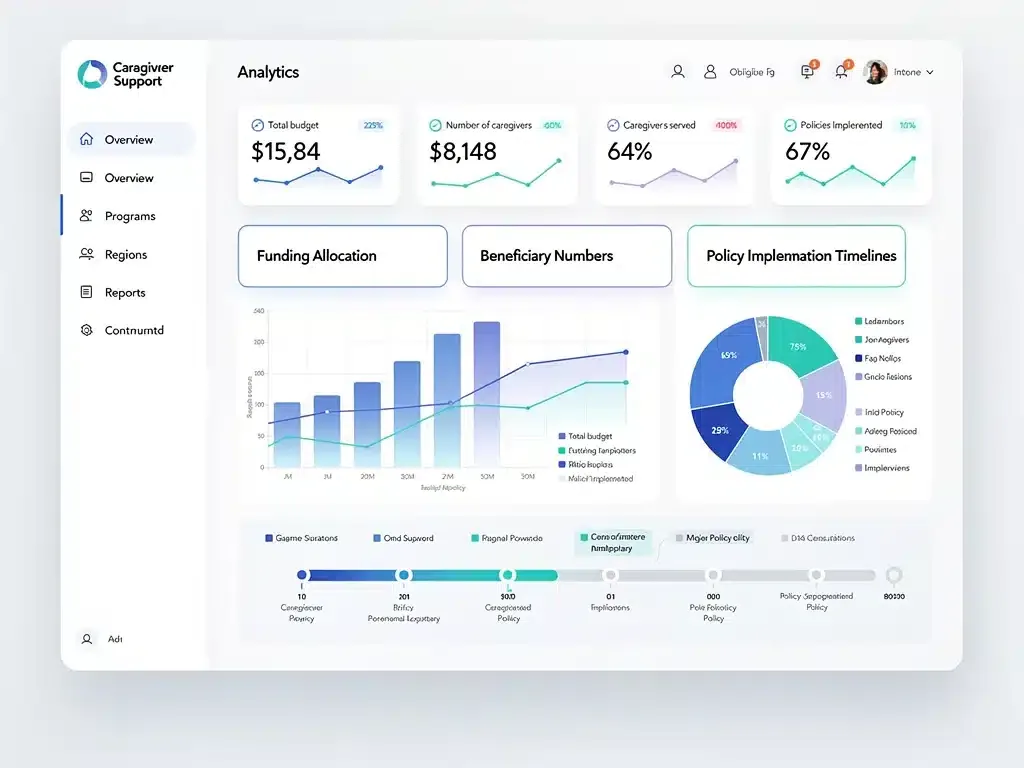
The Role of Technology in Future Caregiver Support
Technology is poised to play an increasingly important role in shaping the landscape of Caregiver Benefits 2026, offering innovative solutions for support, training, and coordination.
Digital platforms can enhance access to resources and streamline administrative processes.
Telehealth services, remote monitoring devices, and online support communities are already transforming how care is delivered and managed.
These tools can provide caregivers with greater flexibility and access to professional guidance, regardless of their location.
Moreover, technological advancements can facilitate better data collection and analysis, enabling policymakers to refine existing programs and identify new areas of need.
This data-driven approach will be instrumental in ensuring that caregiver benefits are effectively targeted and continuously improved.
Leveraging Digital Tools for Enhanced Care
The integration of digital tools, such as mobile applications for care coordination and virtual training modules, can significantly empower caregivers.
These platforms can simplify tasks like medication tracking, appointment scheduling, and communication with healthcare providers, reducing the daily burden on caregivers and improving the overall quality of care under Caregiver Benefits 2026.
Furthermore, artificial intelligence and machine learning could personalize support recommendations, matching caregivers with relevant resources and peer support networks.
This technological frontier promises a more responsive and tailored support system for the diverse needs of caregivers across the nation.
Telehealth and remote monitoring are expanding access to professional care.
Online platforms offer valuable training and peer support communities.
Data analytics will inform and refine future caregiver benefit programs.
Long-Term Vision for Caregiving in the United States
The policy discussions surrounding Caregiver Benefits 2026 are not merely about immediate fixes but represent a broader, long-term vision for caregiving in the United States.
The aim is to create a sustainable, equitable, and supportive ecosystem for all caregivers.
This vision includes a cultural shift, where caregiving is recognized as a societal responsibility rather than solely a private family matter.
Such a shift would entail greater public investment and a more integrated approach across various sectors, including healthcare, social services, and employment.
Ultimately, the goal is to ensure that caregivers are not only supported but also empowered to provide the best possible care while maintaining their own well-being and quality of life.
The policies of 2026 are foundational to achieving this ambitious long-term objective.
Building a Sustainable Caregiving Ecosystem
Achieving a sustainable caregiving ecosystem requires a commitment to continuous policy evaluation and adaptation.
As demographics evolve and new challenges emerge, the framework for Caregiver Benefits 2026 must be flexible enough to respond effectively. This includes ongoing research into caregiver needs and the effectiveness of support programs.
The long-term vision also emphasizes the importance of community engagement and intergenerational support.
Fostering environments where individuals feel a collective responsibility for care, and where resources are readily accessible, will be crucial for the resilience of the caregiving sector in the decades to come.
Continuous policy evaluation is essential for long-term sustainability.
Promoting a societal recognition of caregiving’s value is a key objective.
Intergenerational support and community engagement are vital components.
Key Point | Brief Description |
|---|---|
Policy Overview | New legislative proposals for Caregiver Benefits 2026 aim to enhance family support. |
Financial Aid Focus | Proposals include tax credits and direct payments to ease financial burdens. |
Expanded Support | Respite care and training programs are set for significant expansion. |
Implementation Outlook | Funding and public awareness are critical for successful rollout of new benefits. |
Frequently Asked Questions About Caregiver Benefits 2026
What are the main goals of the new Caregiver Benefits 2026 policies?▼
The primary goals are to provide more comprehensive support to family caregivers, alleviate financial burdens, expand access to essential services like respite care, and recognize the invaluable contribution of caregivers to society. These policies aim for a more equitable and sustainable caregiving ecosystem.
How might these new policies affect my current caregiving situation?▼
Depending on the final legislation, you could see benefits such as new tax credits, direct financial assistance, or increased access to respite care and training programs. It’s crucial to stay informed about specific eligibility criteria as policies are finalized for Caregiver Benefits 2026.
Will there be financial assistance available for caregivers in 2026?▼
Yes, proposals include various forms of financial aid, such as tax credits for caregiving expenses and potential direct payments or stipends. The exact amounts and eligibility requirements are still under discussion, but financial relief is a key component of the forthcoming Caregiver Benefits 2026.
What role will technology play in the future of caregiver support?▼
Technology is expected to enhance support through telehealth, remote monitoring, and online training platforms. Digital tools will streamline care coordination, provide easier access to resources, and enable data-driven policy improvements for Caregiver Benefits 2026.
Where can I find reliable updates on these policy changes?▼
Official government websites, reputable caregiving advocacy organizations, and news outlets specializing in healthcare policy will be the best sources for updates. Regularly checking these platforms will ensure you have the most current information regarding Caregiver Benefits 2026.
Looking Ahead: The Evolving Landscape of Caregiving
The upcoming changes to Caregiver Benefits 2026 signify a pivotal moment for family support in the United States. These policy shifts reflect a growing national understanding of the immense contributions and challenges faced by caregivers.
To explore official government support options, assistance programs, and resources available to families, caregivers can visit USA.gov’s comprehensive guide on disability and caregiver support.
As legislative efforts progress, it will be crucial for families and advocates to remain engaged and informed, ensuring their voices continue to shape a more supportive future.
The successful implementation of these policies will not only alleviate immediate burdens but also lay the groundwork for a more robust and equitable caregiving infrastructure for generations to come, truly transforming the landscape of family support.