Maximizing Your Education Benefits: 2026 Federal Grants & Scholarships
Anúncios
By February 2026, the landscape of federal student aid has been redefined by the One Big Beautiful Bill (OBBB).
This landmark legislation, effective for the 2026-2027 academic year, simplifies the FAFSA process while introducing stricter borrowing caps on graduate and parent loans.
Staying informed is no longer optional; it is the primary tool for financial survival.
This guide provides a clear roadmap to navigating these new regulations, ensuring students and families can strategically secure the funding necessary for academic success in this new era of fiscal accountability.
Understanding Federal Grants: The Foundation of Financial Aid
Federal grants represent a cornerstone of financial assistance for many students, offering funds that typically do not need to be repaid.
Anúncios
These grants are often need-based, meaning eligibility is determined by a student’s or family’s financial situation as assessed through the Free Application for Federal Student Aid (FAFSA).
The primary goal of federal grants is to make higher education accessible to individuals from all socioeconomic backgrounds.
Grasping the nuances of each grant program is essential for Maximizing Your Education Benefits: A 2026 Guide to Federal Grants and Scholarships in the US.
For the 2026 academic year, it is anticipated that key federal grant programs will continue to play a pivotal role. These programs are subject to congressional appropriations, so staying updated on legislative changes is always advised.
Pell Grants: The Largest Federal Grant Program
The Pell Grant remains the largest federal grant program, providing significant financial aid to undergraduate students with exceptional financial need.
The maximum award amount typically adjusts annually, reflecting inflation and legislative decisions.
Eligibility for a Pell Grant is determined by the Expected Family Contribution (EFC), which is calculated from the information provided on the FAFSA.
Anúncios
Students should prioritize submitting their FAFSA as early as possible to ensure timely consideration for these funds.
It is important to note that Pell Grant eligibility can be affected by factors such as enrollment status (full-time or part-time) and the cost of attendance at the chosen institution.
Understanding these variables is key to Maximizing Your Education Benefits: A 2026 Guide to Federal Grants and Scholarships in the US.
Federal Supplemental Educational Opportunity Grants (FSEOG)
- FSEOGs are administered directly by participating schools, offering additional funds to students with the greatest financial need.
- Unlike Pell Grants, FSEOG funds are limited per institution, making early FAFSA submission even more critical for these awards.
- Award amounts vary significantly based on institutional policy and individual student need, ranging from a few hundred to several thousand dollars.
These grants are often awarded in conjunction with Pell Grants, providing an extra layer of support for students facing significant financial barriers. Schools have discretion in awarding FSEOG funds, often prioritizing those with the lowest EFC.
Students should inquire directly with their prospective financial aid offices about FSEOG availability and application procedures.
This proactive step can significantly contribute to Maximizing Your Education Benefits: A 2026 Guide to Federal Grants and Scholarships in the US.

Navigating Federal Scholarships: Beyond Grants
While federal grants are predominantly need-based, federal scholarships often recognize academic merit, specific fields of study, or service commitments.
These programs are designed to encourage students to pursue particular career paths or excel in specialized areas.
Understanding the distinction between grants and scholarships is fundamental when planning your financial aid strategy. Scholarships, like grants, typically do not require repayment, making them highly desirable forms of aid.
For the 2026 academic year, several federal scholarship programs will continue to offer substantial support.
Awareness of these opportunities is vital for Maximizing Your Education Benefits: A 2026 Guide to Federal Grants and Scholarships in the US.
TEACH Grant: Service-Oriented Funding
The Teacher Education Assistance for College and Higher Education (TEACH) Grant provides up to $4,000 per year to students who commit to teaching in high-need fields at low-income schools after graduation.
This grant is unique because it converts to an unsubsidized loan if the service obligation is not met.
Students interested in the TEACH Grant must meet specific academic requirements and complete counseling. It is crucial to fully understand the service obligation before accepting this grant to avoid future repayment.
This program represents a powerful tool for aspiring educators committed to public service.
Properly managing the commitments is essential for Maximizing Your Education Benefits: A 2026 Guide to Federal Grants and Scholarships in the US through the TEACH Grant.
Iraq and Afghanistan Service Grant
- This grant is for students whose parent or guardian died as a result of military service in Iraq or Afghanistan after September 11, 2001.
- Recipients must not be eligible for a Pell Grant based on their EFC but must meet the Pell Grant’s other eligibility requirements.
- The award amount is comparable to the maximum Pell Grant, providing crucial support for qualifying students.
The Iraq and Afghanistan Service Grant offers a direct form of aid to families who have made profound sacrifices. This grant ensures that educational opportunities remain accessible despite tragic circumstances.
Families who believe they may qualify should investigate this grant thoroughly. It is a critical component for many in Maximizing Your Education Benefits: A 2026 Guide to Federal Grants and Scholarships in the US.
The FAFSA: Your Gateway to Federal Aid
The Free Application for Federal Student Aid (FAFSA) is the single most important document for accessing federal financial aid. It serves as the application for Pell Grants, FSEOGs, federal student loans, and federal work-study programs.
For the 2026-2027 academic year, the FAFSA will typically open on October 1, 2025. Submitting it as early as possible is always recommended, as some funds are awarded on a first-come, first-served basis, particularly grants.
Accuracy in completing the FAFSA is paramount. Errors can delay processing or lead to incorrect aid determinations, hindering efforts in Maximizing Your Education Benefits: A 2026 Guide to Federal Grants and Scholarships in the US.
Key Information Required for FAFSA
The FAFSA requires detailed financial information, including income, assets, and tax returns for both the student and, if applicable, their parents. It also asks for demographic data and information about schools the student is considering.
Students and parents will need an FSA ID to access and sign the FAFSA electronically. This ID also serves as a legal signature and provides access to federal student aid websites.
Gathering all necessary documents before starting the FAFSA can significantly streamline the process. This preparation is a critical step in Maximizing Your Education Benefits: A 2026 Guide to Federal Grants and Scholarships in the US.

Common FAFSA Mistakes to Avoid
- Missing Deadlines: Federal, state, and institutional deadlines vary; missing any can result in lost aid opportunities.
- Incorrect Information: Even small errors can cause delays or require corrections, impacting aid eligibility.
- Not Listing Enough Schools: Students can list up to 10 schools on the FAFSA, ensuring all potential institutions receive their aid information.
Many online resources and school financial aid offices offer assistance with FAFSA completion. Utilizing these resources can prevent common pitfalls and ensure a smooth application process.
Proactive engagement with the FAFSA ensures that all potential aid avenues are explored and secured, directly impacting the success of Maximizing Your Education Benefits: A 2026 Guide to Federal Grants and Scholarships in the US.
State and Institutional Aid: Complementing Federal Funds
While federal aid provides a strong foundation, state governments and individual colleges and universities offer their own robust financial aid programs.
These often include grants, scholarships, and even tuition waivers that can significantly reduce educational costs.
Many state aid programs require FAFSA completion, often with specific state deadlines. Students should research their state’s higher education agency website for detailed information on state-specific grants and scholarships.
Institutional aid varies widely by school, with some offering generous packages based on merit, need, or a combination of both.
Exploring these options is crucial for Maximizing Your Education Benefits: A 2026 Guide to Federal Grants and Scholarships in the US.
State-Specific Grant Programs
Each state has unique grant programs tailored to its residents, often encouraging enrollment in in-state institutions. These grants can be substantial and cover a significant portion of tuition and fees.
Examples include programs for students pursuing specific fields, those from low-income backgrounds, or students demonstrating academic excellence. Eligibility criteria are set by individual states, so thorough research is necessary.
Students should consult their state’s education department websites or their high school guidance counselors for a comprehensive list of available state aid programs.
This local knowledge is invaluable for Maximizing Your Education Benefits: A 2026 Guide to Federal Grants and Scholarships in the US.
University-Specific Scholarships and Awards
- Many universities offer their own scholarship programs, some of which are automatically considered based on admission applications.
- Others require separate applications, essays, or interviews, often tied to specific departments or donor criteria.
- These scholarships can range from small book stipends to full tuition waivers, significantly impacting a student’s financial burden.
Students should meticulously review the financial aid sections of their prospective universities’ websites. Paying attention to institutional deadlines for scholarship applications is as important as federal deadlines.
Engaging with university admissions and financial aid counselors can uncover lesser-known opportunities, further assisting in Maximizing Your Education Benefits: A 2026 Guide to Federal Grants and Scholarships in the US.
Private Scholarships: Expanding Your Funding Horizons
Beyond federal, state, and institutional aid, a vast array of private scholarships exists, funded by foundations, corporations, community organizations, and individuals.
These scholarships can be highly specialized, targeting students with unique talents, backgrounds, or career aspirations.
Searching for private scholarships requires diligence and often begins months before college applications are due. Online scholarship search engines are excellent starting points, but local community resources should not be overlooked.
While individual private scholarships may be smaller, accumulating several can significantly impact overall educational costs.
This diversified approach is key to Maximizing Your Education Benefits: A 2026 Guide to Federal Grants and Scholarships in the US.
Effective Strategies for Scholarship Searching
Start early and cast a wide net, applying for any scholarship for which you meet the criteria, no matter how small the award. Small scholarships can add up quickly and cover various educational expenses.
Tailor your applications to each scholarship’s specific requirements, highlighting how your experiences, goals, and qualifications align with their mission. Generic applications are less likely to succeed.
Seek out scholarships related to your major, extracurricular activities, religious affiliation, ethnicity, or even your parents’ employers.
Many niche scholarships go unclaimed due to a lack of applicants, enhancing your chances of Maximizing Your Education Benefits: A 2026 Guide to Federal Grants and Scholarships in the US.
Key Resources for Private Scholarships
- Online Scholarship Databases: Websites like Fastweb, Scholarship.com, and College Board offer extensive searchable databases.
- High School Guidance Counselors: They often have lists of local and regional scholarship opportunities.
- Community Organizations: Local Rotary Clubs, Lions Clubs, and other community groups frequently offer scholarships.
Persistence is crucial in the private scholarship search. The time invested in finding and applying for these funds can yield substantial returns, making education more affordable.
Leveraging every available resource is fundamental for Maximizing Your Education Benefits: A 2026 Guide to Federal Grants and Scholarships in the US through private funding.
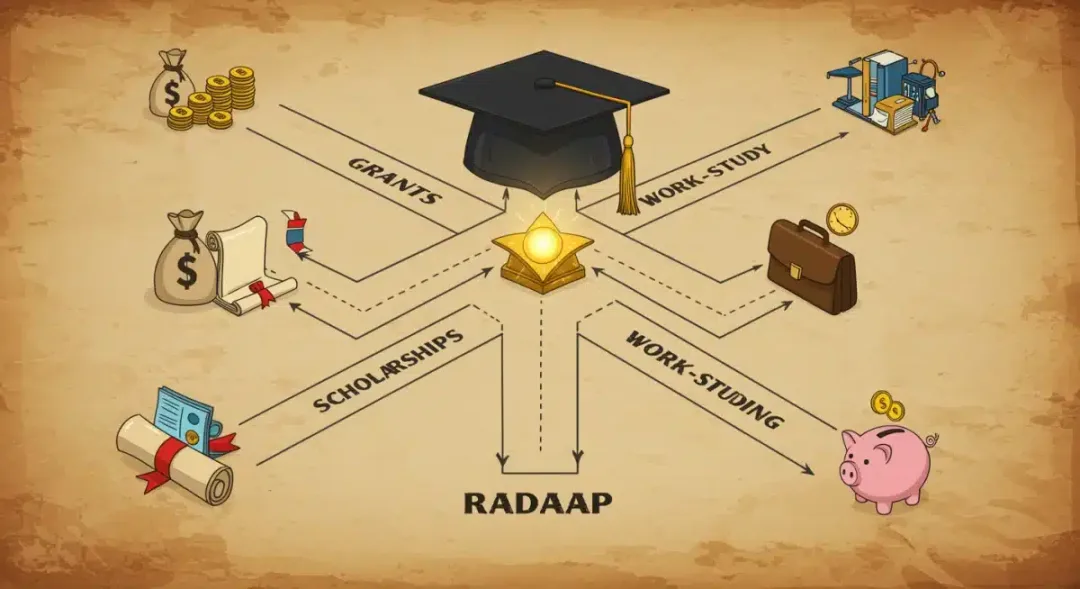
Federal Student Loans and Work-Study: Additional Support
Even after grants and scholarships, many students still require additional financial assistance. Federal student loans and work-study programs offer further avenues of support, each with distinct benefits and responsibilities.
Federal student loans generally offer more favorable terms than private loans, including fixed interest rates, income-driven repayment plans, and opportunities for deferment or forbearance. Understanding these terms is vital for responsible borrowing.
Federal Work-Study provides part-time jobs for undergraduate and graduate students with financial need, allowing them to earn money to help pay for educational expenses.
This can be a valuable component of Maximizing Your Education Benefits: A 2026 Guide to Federal Grants and Scholarships in the US.
Understanding Federal Student Loan Options
Direct Subsidized Loans are available to undergraduate students with demonstrated financial need, where the government pays the interest while the student is in school at least half-time.
Direct Unsubsidized Loans are available to both undergraduate and graduate students, regardless of financial need, but interest accrues from the time the loan is disbursed.
Direct PLUS Loans are available to graduate or professional students and parents of dependent undergraduate students to help pay for education expenses not covered by other financial aid. These loans require a credit check.
Careful consideration of loan amounts and types is necessary to avoid accumulating excessive debt.
Borrowing only what is truly needed is a principle of Maximizing Your Education Benefits: A 2026 Guide to Federal Grants and Scholarships in the US.
Federal Work-Study Program Benefits
- Provides flexible part-time employment, often on campus or at non-profit organizations, allowing students to balance work and studies.
- Earnings are typically paid directly to the student, helping cover living expenses and reducing the need for loan borrowing.
- Jobs often provide valuable work experience related to the student’s field of study, enhancing career readiness.
Work-study eligibility is determined by the FAFSA and is often limited by institutional funds. Students interested in work-study should indicate their interest on the FAFSA and follow up with their school’s financial aid office.
This program offers a practical way to earn money while gaining experience, contributing to a holistic approach in Maximizing Your Education Benefits: A 2026 Guide to Federal Grants and Scholarships in the US.
Strategic Planning for 2026: Key Takeaways
Successful financial aid acquisition for the 2026 academic year hinges on proactive planning and thorough research. Beginning the process early, understanding deadlines, and accurately completing all required forms are non-negotiable steps.
Students and families should create a comprehensive financial aid strategy that considers all potential sources: federal, state, institutional, and private. This multi-pronged approach increases the likelihood of securing maximum funding.
Regularly checking for updates from federal and state education departments, as well as prospective institutions, will ensure you are always working with the most current information.
This vigilance is crucial for Maximizing Your Education Benefits: A 2026 Guide to Federal Grants and Scholarships in the US.
Timeline and Deadlines: A Critical Overview
The FAFSA for 2026-2027 is expected to open on October 1, 2025. While federal deadlines are often later, state and institutional deadlines can be much earlier, sometimes as early as November or December.
Creating a personalized financial aid calendar with all relevant deadlines is highly recommended. Missing a deadline, even by a day, can result in forfeiture of significant aid opportunities.
Prioritize deadlines for grants and scholarships as these funds are often limited. Loans generally have more flexible application periods, but it is still wise to apply well in advance.
This structured approach underpins Maximizing Your Education Benefits: A 2026 Guide to Federal Grants and Scholarships in the US.
Seeking Professional Guidance
- High school guidance counselors are invaluable resources for initial financial aid advice and scholarship searches.
- College financial aid officers can provide specific information about institutional aid and help troubleshoot FAFSA issues.
- Non-profit organizations dedicated to college access often offer free workshops and one-on-one counseling.
Do not hesitate to seek help when navigating the complexities of financial aid. Expert advice can clarify confusing aspects and help identify opportunities you might otherwise miss.
Leveraging the knowledge of professionals is a smart move for anyone serious about Maximizing Your Education Benefits: A 2026 Guide to Federal Grants and Scholarships in the US.
| Key Aid Type | Brief Description |
|---|---|
| Federal Grants | Need-based funds like Pell and FSEOG, typically not repaid. |
| Federal Scholarships | Merit or service-based aid, such as TEACH Grant, usually not repaid. |
| FAFSA Submission | Essential for all federal aid; prioritize early and accurate completion. |
| Other Aid Sources | State, institutional, and private scholarships complement federal funds. |
Frequently Asked Questions About 2026 Education Benefits
What is the most important step for securing federal financial aid for 2026?▼The most crucial step is completing and submitting the Free Application for Federal Student Aid (FAFSA) as early as possible after it opens in October 2025. This form determines eligibility for various federal grants, loans, and work-study programs.
Do federal grants need to be repaid?▼Generally, federal grants like the Pell Grant do not need to be repaid. However, exceptions exist, such as the TEACH Grant, which converts to a loan if the service obligation is not fulfilled. Always understand the terms of any grant received.
How do federal scholarships differ from federal grants?▼Federal grants are primarily need-based, determined by financial circumstances. Federal scholarships, while also not requiring repayment, are often merit-based or tied to specific fields of study or service commitments, like the TEACH Grant for aspiring teachers.
Can I receive both federal and private scholarships?▼Yes, absolutely. Students are encouraged to apply for all types of financial aid, including federal grants, federal scholarships, and numerous private scholarships. Combining these sources is an effective strategy for minimizing out-of-pocket educational costs.
What resources are available if I need help with my financial aid application?▼Numerous resources can assist you. Your high school guidance counselor, college financial aid offices, and non-profit organizations specializing in college access often provide free assistance and workshops to help students navigate the application process.
Looking Ahead: Sustaining Your Educational Journey
The journey of Maximizing Your Education Benefits: A 2026 Guide to Federal Grants and Scholarships in the US is an ongoing process that extends beyond initial applications.
In 2026, this requires staying alert to major shifts, such as the new Repayment Assistance Program (RAP) and the updated borrowing limits for Parent PLUS and Graduate PLUS loans.
Success in this landscape demands continuous engagement with financial aid resources, strict adherence to FAFSA deadlines, and a proactive approach to seeking out new opportunities.
As the academic landscape evolves, so will the programs and policies designed to support students.
Staying informed of legislative changes—like the recent asset exemptions for small businesses and farms—will be essential for maintaining financial stability throughout your educational career.
By embracing a comprehensive strategy, students can significantly reduce financial barriers and focus on achieving their academic and career aspirations.
To ensure you are utilizing every available resource, explore these six ways to maximize your education benefits, which offer critical strategies for aligning federal support with your long-term goals.