Education Reform: Federal Funding Boost of $10 Billion Approved for US Schools in 2026

Anúncios
A groundbreaking federal education funding 2026 initiative has secured a $10 billion boost for US schools, setting the stage for transformative reforms. This substantial investment targets critical areas to enhance educational outcomes and address longstanding disparities. The approved funds promise a new era of opportunity and innovation within the American schooling system.
The landscape of American education is on the cusp of a significant transformation with the recent approval of a federal education funding 2026 boost. A staggering $10 billion is slated to revitalize schools across the United States, promising comprehensive reforms designed to enhance learning environments, foster innovation, and promote equitable access to quality education. This landmark decision reflects a concerted effort to address the evolving needs of students and educators alike, signaling a new chapter for public education.
This substantial financial injection, part of a broader education reform agenda, aims to tackle key challenges ranging from outdated infrastructure and technological gaps to teacher shortages and curriculum development. The allocation of these funds is expected to be strategic, targeting areas where the impact will be most profound and sustainable, ultimately benefiting millions of students nationwide. Stakeholders are now keenly observing how this unprecedented investment will translate into tangible improvements within classrooms and communities.
Anúncios
Understanding the $10 Billion Federal Education Funding 2026 Boost
The recently approved $10 billion federal education funding 2026 package represents one of the most significant investments in public education in recent history. This considerable sum is not merely a financial aid but a strategic catalyst intended to drive systemic improvements across all levels of schooling. The initiative underscores a national commitment to ensuring that every student, regardless of their socioeconomic background or geographical location, has access to a high-quality education.
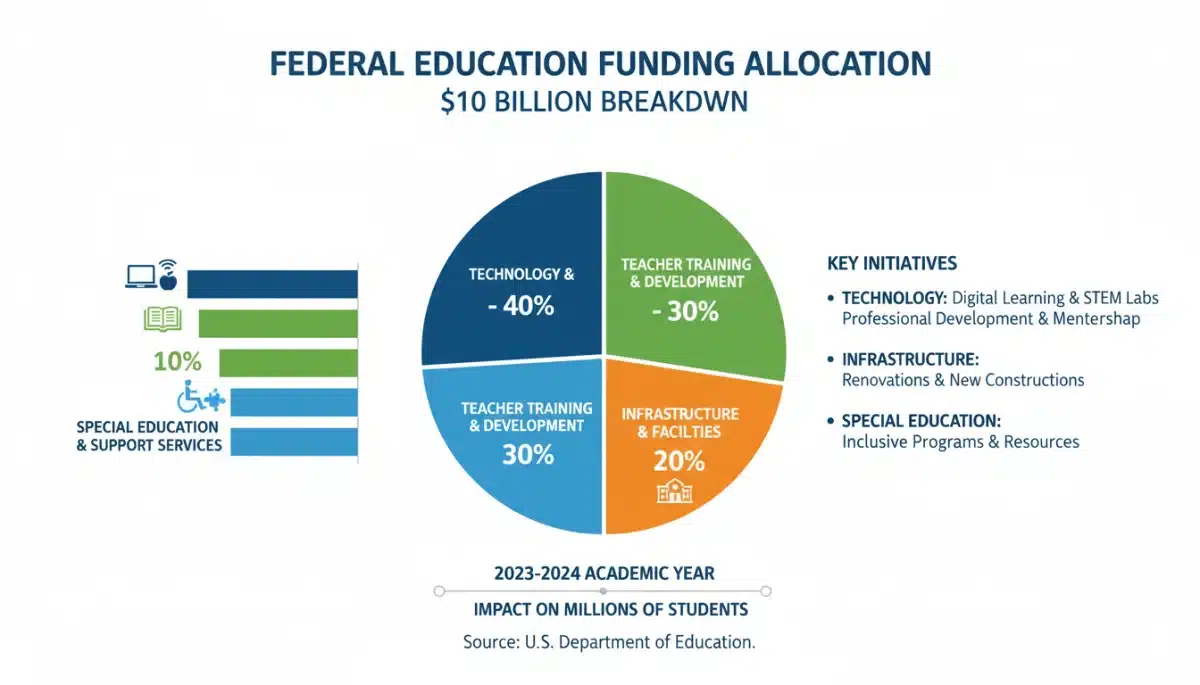
This funding boost is designed to be multifaceted, addressing a spectrum of needs that have long plagued the US education system. From enhancing educational technology and upgrading facilities to supporting professional development for teachers and expanding access to specialized programs, the funds are earmarked for comprehensive reform. The goal is to create more resilient, equitable, and effective learning environments that prepare students for future challenges.
Anúncios
The approval process involved extensive debate and collaboration among policymakers, educational experts, and community leaders, highlighting the broad consensus on the urgent need for such an intervention. This bipartisan effort reflects a shared vision for a stronger educational foundation, setting a precedent for future investments in the nation’s youth. The implementation phase will be crucial in translating this financial commitment into tangible educational advancements.
Key Pillars of the Education Reform Initiative
The overarching education reform initiative, bolstered by the federal education funding 2026, is structured around several key pillars designed to create a holistic impact. These pillars represent strategic areas of investment, each critical to fostering a more robust and equitable educational ecosystem. The focus extends beyond mere monetary allocation to include fundamental changes in policy and practice.
One primary pillar involves significant investment in educational technology and digital literacy, recognizing the increasingly digital world students inhabit. Another crucial area is teacher recruitment, retention, and professional development, acknowledging that highly qualified and supported educators are the backbone of any successful school system. The reform also emphasizes infrastructure improvements, ensuring safe, modern, and conducive learning environments for all students.
Furthermore, the initiative places a strong emphasis on equitable access to resources and opportunities, particularly for underserved communities and students with special needs. This includes funding for specialized programs, mental health support, and initiatives aimed at reducing achievement gaps. These interconnected pillars collectively aim to build a more inclusive and forward-thinking educational framework.
Enhancing Educational Technology and Digital Literacy
A substantial portion of the federal education funding 2026 is directed towards modernizing educational technology and boosting digital literacy across US schools. This move acknowledges the critical role technology plays in contemporary learning and future workforce readiness. Schools will receive resources to acquire up-to-date hardware, software platforms, and high-speed internet access, ensuring students are equipped with essential digital skills.
This investment extends beyond just providing devices; it also includes robust training programs for educators to effectively integrate technology into their teaching methodologies. The aim is to create dynamic learning experiences that engage students and prepare them for a technology-driven world. By fostering digital literacy, the reform seeks to bridge the digital divide and ensure all students can thrive in an increasingly connected society.
Investing in Teacher Development and Support
Recognizing that teachers are central to student success, a significant part of the federal education funding 2026 is allocated to teacher development and support programs. This includes funding for competitive salaries, professional growth opportunities, and initiatives aimed at attracting and retaining highly skilled educators. Addressing teacher shortages and burnout is a critical component of this reform.
The investment will support ongoing professional learning, allowing teachers to stay abreast of the latest pedagogical approaches and subject matter advancements. It also provides for mentorship programs and resources to support new teachers, ensuring a strong and stable teaching force. By prioritizing the well-being and professional growth of educators, the reform seeks to elevate the teaching profession and improve instructional quality.
Expected Impact on Students and Classrooms
The infusion of $10 billion in federal education funding 2026 is anticipated to have a profound and transformative impact on students and classrooms nationwide. The direct beneficiaries will be the millions of young learners who will experience improved facilities, enhanced learning resources, and more effective instructional practices. This investment aims to create environments where every student can reach their full potential.
Students can expect to encounter more engaging and personalized learning experiences, driven by modern technology and innovative curricula. The funding will also support smaller class sizes in some areas, allowing for more individualized attention from teachers. Furthermore, increased access to specialized programs, such as STEM initiatives and arts education, will broaden horizons and cater to diverse student interests.
Ultimately, the goal is to foster a generation of well-rounded, critically thinking individuals prepared for higher education and the demands of the modern workforce. The reforms aim to reduce educational disparities, ensuring that students from all backgrounds have equitable opportunities to succeed. This long-term vision positions the funding as an investment in the nation’s future human capital.
Addressing Educational Equity and Underserved Communities
A cornerstone of the federal education funding 2026 initiative is its deliberate focus on addressing educational equity, particularly within underserved communities. Historical disparities in funding and resources have created significant achievement gaps, and this reform seeks to actively dismantle those barriers. The $10 billion allocation includes specific provisions to uplift schools and districts that have historically been underfunded.
This targeted approach ensures that resources are directed where they are most needed, providing essential support to schools serving low-income students, rural communities, and minority populations. Initiatives include funding for expanded preschool programs, after-school activities, and comprehensive student support services, such as counseling and mental health resources. The goal is to create a level playing field for all students.
By prioritizing equity, the reform seeks to not only improve academic outcomes but also foster a sense of belonging and opportunity for every child. This investment is about more than just numbers; it’s about investing in the dignity and potential of communities that have often been overlooked. The long-term success of this funding will be measured by its ability to close these persistent gaps.
Infrastructure Upgrades and Modern Learning Environments
A significant portion of the federal education funding 2026 will be dedicated to crucial infrastructure upgrades, transforming outdated school buildings into modern learning environments. Many schools across the US grapple with aging facilities, inadequate ventilation, and a lack of necessary technological infrastructure, all of which impede effective teaching and learning. This funding aims to rectify these long-standing issues.
The upgrades will encompass a wide range of improvements, from renovating classrooms and science labs to enhancing athletic facilities and improving accessibility for students with disabilities. Energy efficiency improvements and the integration of sustainable practices will also be prioritized, creating healthier and more environmentally friendly school campuses. Such investments are vital for fostering a positive and productive learning atmosphere.
Creating safe, functional, and aesthetically pleasing learning spaces is paramount to student engagement and well-being. Modern infrastructure supports innovative teaching practices and provides the necessary foundation for advanced educational technology. This comprehensive approach to facility improvement ensures that the physical environment of schools is conducive to 21st-century education and supports the overall goals of the federal education funding 2026 initiative.
The Role of Stakeholders and Community Engagement
The success of the federal education funding 2026 and its associated reforms hinges significantly on the active involvement of various stakeholders and robust community engagement. This is not merely a top-down mandate but rather an collaborative effort that requires input and participation from all levels. Educators, parents, community leaders, and local businesses all have a vital role to play in shaping how these funds are utilized and ensuring they meet local needs effectively.
School districts are encouraged to establish transparent processes for community input, allowing for localized decision-making that reflects the unique challenges and opportunities within each area. This includes forming advisory committees, hosting public forums, and conducting surveys to gather diverse perspectives. Engaging families in the educational process is particularly crucial, as their support is indispensable for student success.
Furthermore, partnerships with local businesses and non-profit organizations can amplify the impact of the federal funding, providing additional resources and expertise. This collaborative approach ensures that the reforms are not only implemented but also sustained through broad-based support. The effectiveness of the federal education funding 2026 will be a testament to the power of collective action and shared responsibility in improving education.

Monitoring Progress and Accountability Measures
With such a substantial investment through the federal education funding 2026, robust monitoring and accountability measures are paramount to ensure the funds are used effectively and achieve their intended outcomes. Transparency and measurable progress will be key components of this reform effort. Federal and state agencies will establish clear metrics and reporting requirements to track how the $10 billion is being spent and what impact it is having on educational indicators.
These accountability frameworks will likely include regular audits, performance reviews, and data collection on student achievement, graduation rates, teacher retention, and facility improvements. The goal is to identify successful strategies that can be replicated and areas that require further intervention. Public access to this data will foster transparency and allow communities to track their local schools’ progress, reinforcing the commitment to the federal education funding 2026 initiative.
The emphasis on accountability extends beyond mere compliance; it aims to foster a culture of continuous improvement within the education system. By setting clear goals and regularly evaluating progress, policymakers and educators can make informed decisions to optimize the use of these vital resources. This commitment to oversight ensures that the $10 billion investment in federal education funding 2026 delivers lasting and meaningful change for students across the nation.
Long-Term Vision for American Education
The approval of the $10 billion federal education funding 2026 is not merely a short-term fix but a foundational step towards a long-term vision for American education. This significant investment is designed to lay the groundwork for sustained improvement and innovation, positioning the US education system for future success. The reforms aim to cultivate a learning environment that is adaptable, inclusive, and forward-thinking, preparing students for a rapidly changing world.
This long-term vision includes fostering a culture of lifelong learning, where education extends beyond traditional classroom settings and embraces diverse pathways to knowledge and skill development. It also envisions a system where technology seamlessly integrates with pedagogy, creating dynamic and personalized learning experiences for every student. The federal education funding 2026 aims to empower educators and inspire students to reach new heights.
Ultimately, the goal is to create an education system that is a source of national pride, producing globally competitive citizens who are equipped with critical thinking skills, creativity, and a strong sense of civic responsibility. This ambitious undertaking, supported by the substantial federal funding, reflects a collective commitment to the future of the nation’s youth and the prosperity of the United States. The journey towards this vision begins with the strategic deployment of the federal education funding 2026.
| Key Aspect | Brief Description |
|---|---|
| Funding Amount | Approved $10 billion for US schools, starting in 2026. |
| Primary Goals | Enhance technology, support teachers, upgrade infrastructure, boost equity. |
| Targeted Impact | Students, teachers, and underserved communities nationwide. |
| Accountability | Robust monitoring and reporting mechanisms for effective use. |
Frequently Asked Questions About Federal Education Funding 2026
The total approved federal funding boost for US schools in 2026 is $10 billion. This significant investment is intended to drive comprehensive education reform and address various critical needs across the nation’s schooling system, marking a substantial commitment to improving educational outcomes.
The approved $10 billion in federal education funding is slated to become available to US schools starting in 2026. This timeline allows for necessary planning and allocation strategies to be developed at both federal and state levels, ensuring a strategic and impactful distribution of the funds.
The primary areas targeted by the federal education funding 2026 include enhancing educational technology, supporting teacher recruitment and professional development, upgrading school infrastructure, and promoting educational equity. These pillars are designed to create a more robust and inclusive learning environment for all students.
A core focus of the federal education funding 2026 is to address educational equity, particularly in underserved communities. Funds are specifically earmarked to provide resources, specialized programs, and support services to schools in low-income areas, rural regions, and for students with special needs, aiming to close achievement gaps.
Robust accountability measures, including regular audits, performance reviews, and data collection on key educational indicators, will be implemented. These measures ensure transparency and effective utilization of the $10 billion federal education funding 2026 signifies a critical juncture for American education, promising widespread improvements and a renewed focus on student success. This substantial investment of $10 billion is poised to reshape educational strategies, curriculum development, and resource allocation across the nation. It underscores a national commitment to fostering innovation and equity within the schooling system, setting a new standard for educational support.
As these funds begin to flow in 2026, stakeholders will be closely monitoring their deployment and the initial impacts on classrooms and communities. The success of this reform will not only be measured by academic outcomes but also by its ability to create more inclusive, technologically advanced, and supportive learning environments for every student. This initiative represents a profound belief in the transformative power of education and its role in shaping the future of the United States, making the federal education funding 2026 a landmark event.